
Education + College of Dental Medicine
MUSC honors faculty at 2026 James W. Colbert Lectureship and Faculty Awards and Recognition...
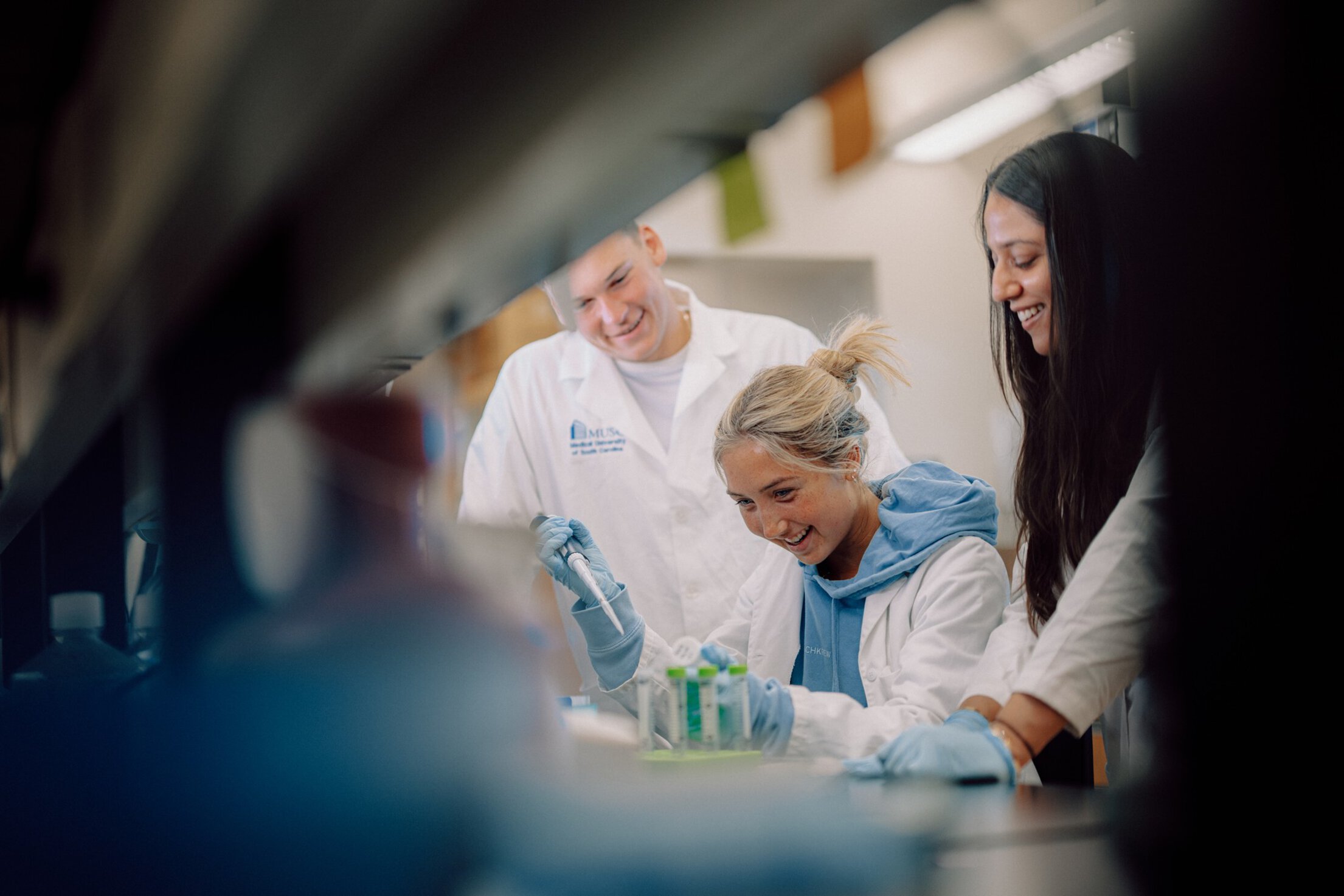
The Master of Science in Medical Sciences (MSMS) program is one-year pre-professional master’s program designed to provide professional development, clinical exposure, and research foundations to prepare students for success in medical or dental school or careers in clinical research. The program contains didactic coursework at the graduate professional level, professional development sessions, clinical research training, and clinical exposures to form a complementary skill set to those that have been acquired at the undergraduate level. Graduates of this program will also be academically prepared to enter support positions related to clinical and translational research.
Summer 2027
Opens: Aug. 15, 2026
Final deadline: April 1, 2027
Build your future in health care through graduate coursework, hands-on clinical experience, research training, and focused workshops that strengthen your academic foundation and career direction.
The Master of Science in Medical Sciences prepares you to strengthen your academic foundation for medical or dental school while building valuable experience in clinical exposure, research, and professional development. In this residential program, you will move through graduate level coursework designed to deepen your understanding of biomedical science and help you grow as a competitive candidate for future study or careers connected to clinical and translational research.
Through a structured curriculum completed across three semesters, you’ll build knowledge in biochemistry, histology, anatomy, oral immunobiology, medical microbiology, clinical biostatistics, and clinical epidemiology. You will also strengthen your professional readiness through graduate level academic training, clinical exposures, interprofessional learning, and professional development experiences that help you connect scientific knowledge with future career goals in health care and research.
You’ll learn in an environment designed to help you advance with clarity and purpose over the course of a focused one year program. The curriculum combines didactic instruction with professional development sessions, clinical exposure, and access to clinical research training that can be completed at no additional cost. Together, these experiences help you build confidence, expand your understanding of research processes, and prepare for the expectations of professional school or research support roles.
This program is well suited for students who want to strengthen their preparation for medical or dental school through rigorous graduate study and structured academic development. It is also a strong fit for students who want to build foundations for careers related to clinical and translational research, especially those seeking a one year program that combines science coursework, clinical insight, and research exposure in a supportive academic setting.
The Master of Science in Medical Sciences curriculum consists of 30 credits and is designed to be completed in three semesters. Below is the standard plan of study outlining the structured progression of coursework as you advance through the program.
| Course ID | Course Title | Credits |
|---|---|---|
| BSC700 | Histology | 4 |
| BSC704 | The Brem Method MCAT Prep* | 3 |
| BSC706 | Professional Development | 1 |
| BSC711 | Bioscience Fundamentals | 2 |
| Semester Total | 10 | |
| Course ID | Course Title | Credits |
|---|---|---|
| BSC702 | Anatomy | 4 |
| BSC708 | Grand Rounds | 1 |
|
BSC710, IP### |
Clinical Exposures, or Interprofessional Elective |
1 |
| BSC720 | Fundamentals of Biochemistry & Molecular | 3 |
| Semester Total | 9 | |
| Course ID | Course Title | Credits |
|---|---|---|
| BSC714 | Oral Immunobiology | 4 |
| BSC716 | Medical Microbiology | 4 |
| MCR736 | Clinical Epidemiology | 3 |
| Semester Total | 11 | |
| Curriculum Total | 30 | |
* mandatory for premedical pathway students. Test-out available. A minimum of 3 credits from the elective courses below for students excused from The Brem Method MCAT Prep course:
| Course ID | Course Title | Credits |
|---|---|---|
| BSC710 | Clinical Exposures | 1 |
| BSC970 | Research | 2 |
| IP### | Interprofessional Elective | 1 |
While enrolled at MUSC, students may enroll in the Core Clinical Research Training course at no additional cost. The course provides foundational clinical research training and prepares study team members and research personnel to be effective in their jobs, confident in their understanding of clinical research policies and procedures and grow as research professionals at MUSC.
Join a virtual information session to connect with our team to get your questions answered and learn how you can advance your career.
Discover key information about application steps and required documentation to help you move forward with confidence.
Applicants interested in medical or dental schools are encouraged to apply. Students interested in other professions should reach out to our Senior Graduate Program Manager, Martiza Dawkins-Holnes, via email at dawkin@musc.edu or via phone at 843-876-2216.
All applicants must possess a bachelor’s degree from a regionally accredited institution in the U.S. or its equivalent from a foreign institution with coursework appropriate for admission to medical and other professional schools
The Medical College Admission Test (MCAT) or Dental Admissions Test (DAT) scores are optional.
At MUSC, we actively support all students to ensure their success in both academic and clinical settings. To support this goal, the university outlines the essential qualities and functional abilities required for participation in its educational programs. These include a range of observational, communication, motor, intellectual and behavioral skills necessary for safe and effective practice.
There are no specific prerequisites, but we suggest reviewing the coursework appropriate for application to the Doctor of Dental Medicine program in the College of Dental Medicine and Doctor of Medicine program in the College of Medicine at MUSC.
Before applying, it's essential to ensure that any prior coursework meets the admissions requirements. MUSC provides a helpful reference list of frequently approved prerequisite courses to guide you in understanding which classes may satisfy your program's requirements. To explore the list, visit our Frequently Approved Prerequisites page.
The following outlines the admissions process and what applicants can expect after submitting their application.
All applicants must submit an PostbacCAS application. You do not need to send any of the following information directly to the College of Graduate Studies.
We regret that current regulations prevent us from offering this program to international applicants without a permanent resident visa due to its online component.
Understand tuition, program costs and financial support for the Master of Science in Medical Sciences as you plan your path in medical and health sciences.
Tuition and fees listed below apply to the 2026-27 academic year and are per semester unless otherwise noted.
| Fee Type | Fee |
|---|---|
| Application Fee (per application) | $95 |
| Matriculation Fee (upon applicant acceptance) | $400 |
| Transfer Fee (one-time fee for students transferring from M.D. program) | $1,500 |
| Tuition/Fee Type | Fall | Spring | Summer |
|---|---|---|---|
| In-State Tuition | $6,567 | $6,567 | $6,567 |
| Out-of-State Tuition | $9,790 | $9,790 | $9,790 |
| BSC700 - Histology Fee | - | - | $1,900 |
| BSC704 - MCAT Prep Exam Fee | - | - | $1,500 |
| BSC711 - Bioscience Fundamentals Course Fee | - | - | $500 |
The Cost of Attendance, or COA, estimates the total educational expenses for an enrollment period. The information below reflects the 2026-27 academic year. The COA includes direct costs, such as tuition and fees, billed by the university, as well as indirect costs you may need to plan for, including housing, food, transportation, books and other personal expenses.
The COA helps determine the maximum amount a student may borrow in an academic year and supports funding-related determinations, such as grants, scholarships, loans and others.
Your actual expenses may be lower than the COA, especially with careful budgeting. MUSC's Office of Student Financial Literacy can help you create a budget that supports your education, personal needs and long-term financial goals.
| Item | Year 1 | Est. Total |
|---|---|---|
| Direct Costs | ||
| In-State Tuition | $18,784 | $18,784 |
| Out-of-State Tuition | $27,875 | $27,875 |
| Health Insurance | $4,591 | $4,591 |
| Fees | $4,275 | $4,275 |
| In-State Total Direct Costs | $27,650 | $27,650 |
| Out-of-State Total Direct Costs | $36,741 | $36,741 |
| Indirect Costs | ||
| Living Expenses (Food and Housing) | $24,882 | $24,882 |
| Miscellaneous Personal Expenses | $2,640 | $2,640 |
| Transportation | $2,970 | $2,970 |
| Books, Course Materials, Supplies and Equipment | $4,360 | $4,360 |
| Total Indirect Costs | $34,852 | $34,852 |
| Estimated Total Costs | ||
| In-state Total Costs | $62,502 | $62,502 |
| Out-of-State Total Costs | $71,593 | $71,593 |
MUSC offers scholarships for which you may be eligible. Some are awarded based on academic achievement; others are awarded based on community service, for example. However, the majority of scholarships awarded at MUSC are based on financial need. This means that these scholarships are only awarded to students who need some financial assistance to cover the cost of tuition and fees. If you would like to be considered for a financial need-based scholarship, you must have an up-to-date Free Application for Federal Student Aid (FAFSA) on file. Make sure you list the Medical University of South Carolina on your FAFSA form, along with MUSC's code: 003438. We encourage you to submit your FAFSA as early as possible. It is recommended to submit your FAFSA in January if you plan to enroll in the fall.
The College of Graduate Studies at MUSC is unable to receive official scores. However, you may send your unofficial copies or score reports to oesadmis@musc.edu.
No. This program will not benefit individuals pursuing a PA program.
While this program provides some foundational understanding of research, we would recommend you taking a look at our Master of Science in Biomedical Sciences program, which is a research intensive program.
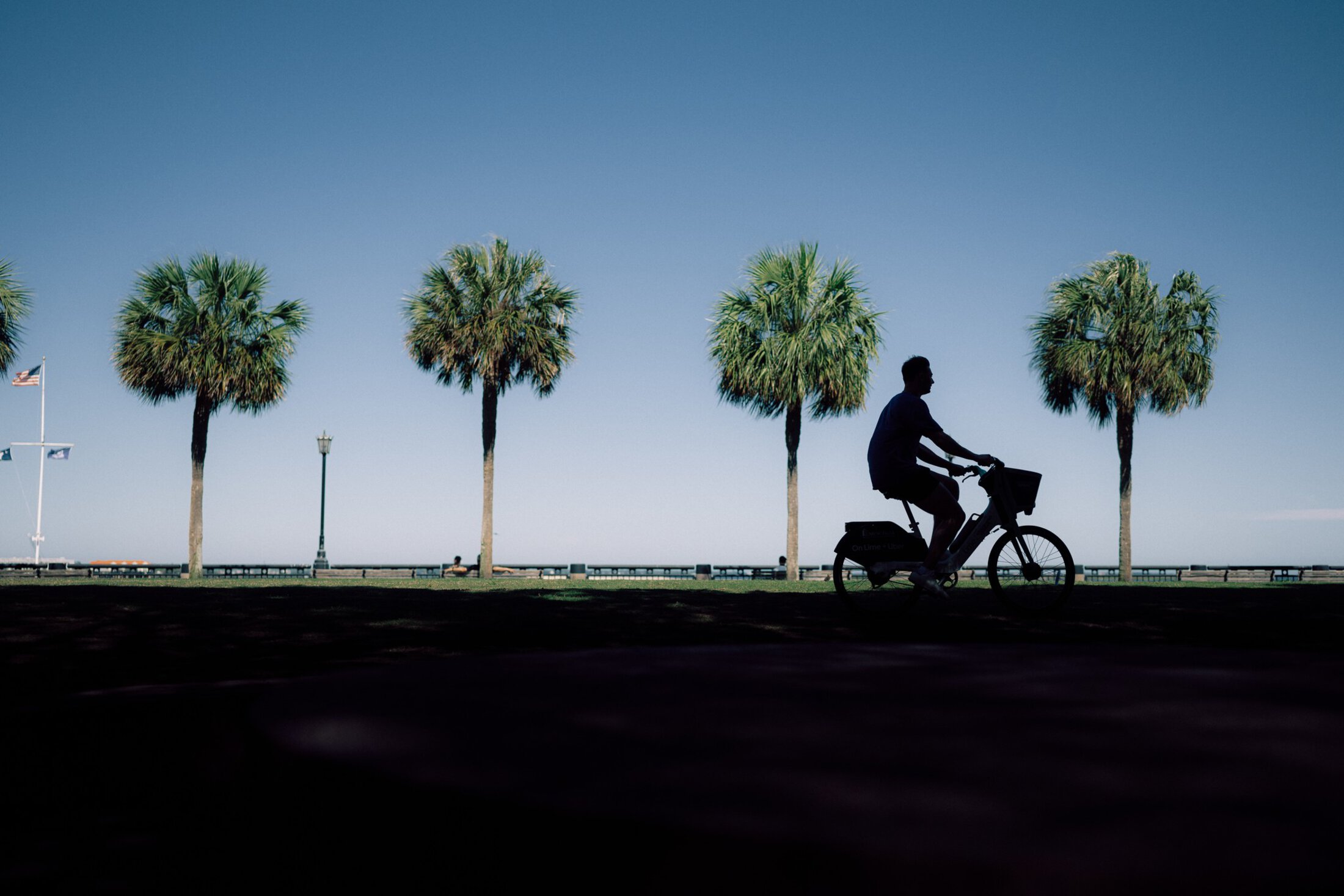
Charleston offers a unique blend of coastal beauty and modern convenience. With top-rated dining, scenic waterfronts and endless outdoor activities, the city offers an unmatched quality of life for residents, striking a balance between work and leisure.
Anchored in MUSC's commitment to trust, innovation, and student empowerment, the program fosters intellectual curiosity, ethical practice, and community impact from the very first day.
The MSMS program aims to prepare graduates to:
Upon completion of the MSMS program, graduates will be able to:
To advance academic and professional readiness by empowering aspiring health professionals to bridge the gap between undergraduate study and success in medical, dental, and biomedical programs.
At the core of our program, we are guided by a commitment to the following values that drive our mission:
To deliver a rigorous, graduate-level curriculum that strengthens scientific knowledge, fosters professional growth, and cultivates ethical, compassionate leaders prepared to excel in advanced health sciences education.
Stay updated on faculty and student achievements in clinical research through regular College of Graduate Studies news and spotlights, including groundbreaking discoveries and event highlights.
The Medical University of South Carolina is accredited by the Southern Association of Colleges and Schools Commission on Colleges (SACSCOC) to offer the Master of Science in Medical Sciences. To learn more about MUSC's accreditation and find contact details, please visit our Accreditation page.