

Cancer Giving + MUSC News
Honoring her uncle, Hollings nurse manager rides in LOWVELO to advance cancer research and bring...
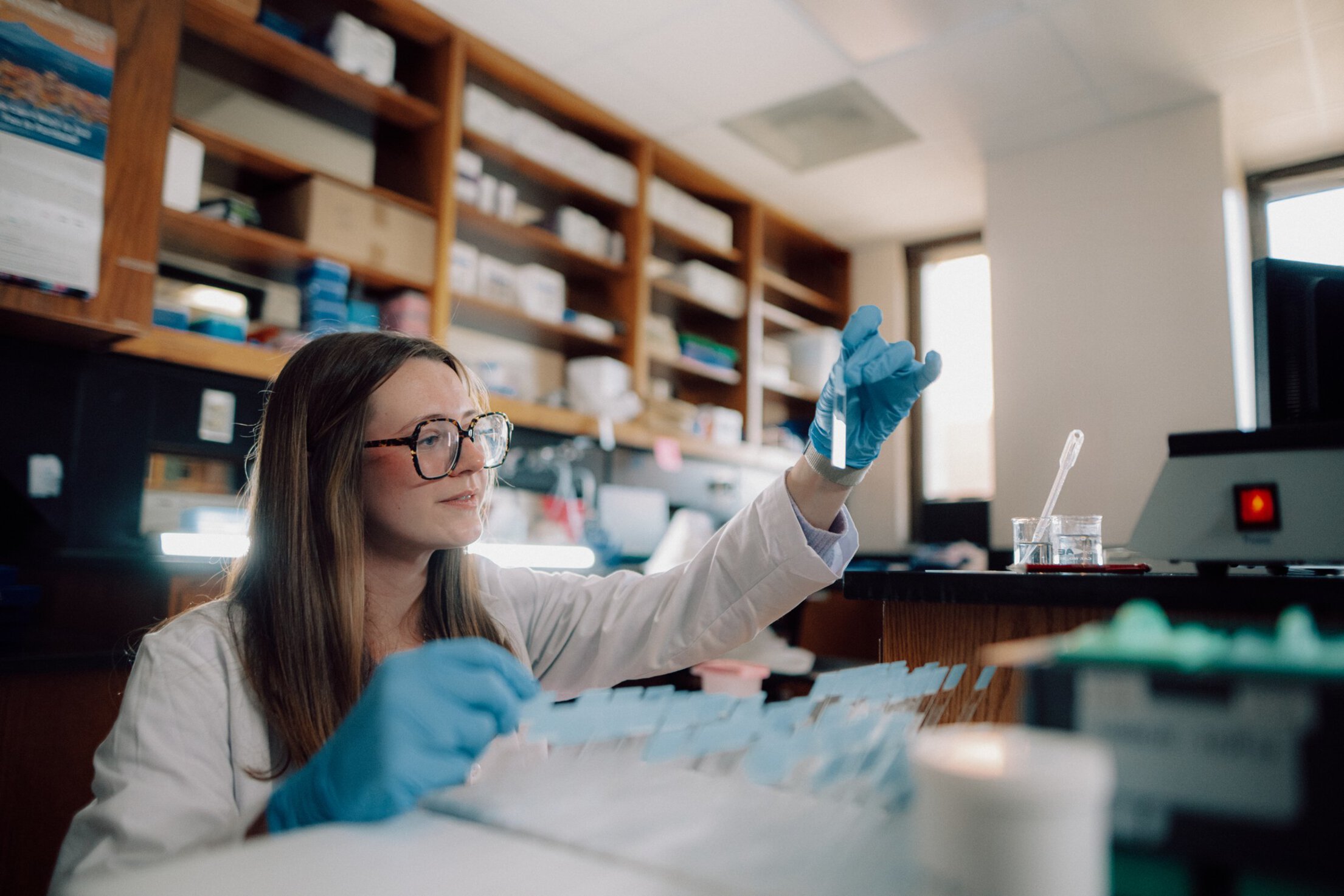
In the Master of Science in Cancer Biology (MS), you study how cancer begins, grows, spreads and responds to intervention while building the research judgment needed to ask better questions. Through residential study in the College of Graduate Studies, you connect coursework with mentor guided inquiry in an academic health sciences setting. You deepen your foundation in molecular and cellular biology, tumor biology, experimental design, data interpretation and communication. You also learn how discovery moves from the laboratory toward understanding of human disease. Whether your next goal is a research role in academia, government or industry, or doctoral or professional study, this program helps you move forward with confidence and purpose.
Fall 2027
Opens: Dec. 1, 2026
Final deadline: June 1, 2027
Move through residential coursework, research seminars, laboratory practice and mentor guided inquiry as you strengthen cancer biology knowledge, experimental judgment and scientific communication.
In this residential program, you enter a learning environment shaped by cancer discovery, biomedical research and the larger clinical mission of an academic health sciences university. Your coursework builds depth in the cellular and molecular processes that influence cancer, while your research experiences help you connect scientific questions to the people and communities affected by disease.
You will strengthen your understanding of tumor biology, molecular and cellular processes, genetics, experimental design and scientific interpretation. You will learn to evaluate research literature, analyze data, communicate findings and approach complex cancer questions with the discipline and curiosity expected of an emerging biomedical scientist.
You will learn with faculty, peers and researchers who help you connect your academic preparation to a larger purpose. Through mentorship, seminars, laboratory based learning and research conversations across MUSC, you will build confidence, professional direction and a stronger sense of your place in cancer discovery.
This program is a strong fit if you have a background in biology, chemistry, biomedical sciences or a related field and want focused graduate preparation in cancer research. You may be preparing for a research role in academia, biotechnology, pharmaceutical science or government, or planning for doctoral, medical or other advanced professional study.
The Master of Science in Cancer Biology curriculum consists of 45 credits and is designed to be completed in five semesters. Below is the standard plan of study outlining the structured progression of coursework as you advance through the program.
| Course ID | Course Title | Credits |
|---|---|---|
| CGS720 | Laboratory Rotation | 2 |
| CGS765 | Proteins: Dynamic Structures & Functions | 1 |
| CGS766 | Genes: Inheritance & Expression | 2 |
| CGS767 | Cells: Organization & Communication | 2 |
| CGS768 | Techniques & Experimental Design | 2 |
| Semester Total | 9 | |
| Course ID | Course Title | Credits |
|---|---|---|
| CB701 | Cancer Technologies | 2 |
| CGS721 | Laboratory Rotation | 3 |
| CGS770 | Principles, Practices & Professionalism | 2 |
| CGS790C | Fundamentals of Cancer Biology | 2 |
| Semester Total | 9 | |
| Course ID | Course Title | Credits |
|---|---|---|
| CGS762 | Scientific Writing for MBS | 1 |
| CGS970 | Research | 8 |
| Semester Total | 9 | |
| Course ID | Course Title | Credits |
|---|---|---|
| BMB752 | Hollings Seminar and Journal | 1 |
| CB703A | Cancer Discoveries in Progress Seminar Series | 1 |
| CGS970 | Research | 4 |
| ELEC | Elective | 3 |
| Semester Total |
9 |
|
| Course ID | Course Title | Credits |
|---|---|---|
| BMB752 | Hollings Seminar and Journal | 1 |
| CB703B | Cancer Discoveries in Progress Seminar Series | 1 |
| CGS970 | Research | 7 |
| Semester Total | 9 | |
| Curriculum Total | 45 | |
| Course ID | Course Title | Credits |
|---|---|---|
| BMB751 | Cancer-Host Interactions | 1 |
| BMB756 | Genomic Instability & Cancer | 1 |
| CB702 | Cancer Prevention and Control | 1 |
| CGS743 | Cancer Cell Signaling | 1 |
Join a virtual information session to connect with our team to get your questions answered and learn how you can begin your research journey.
Discover key information about application steps and required documentation to help you move forward with confidence.
All applicants must:
Submission of a standardized test score is not required but will be considered if submitted. Experience in research is desirable, although not required.
Please note that for the first semester, students must be able to attend in-person classes and laboratory rotations Monday through Friday, 9:00 am to 5:00 pm.
At MUSC, we actively support all students to ensure their success in both academic and clinical settings. To support this goal, the university outlines the essential qualities and functional abilities required for participation in its educational programs. These include a range of observational, communication, motor, intellectual and behavioral skills necessary for safe and effective practice.
While there are no prerequisites, upper-level biology and chemistry courses (or mathematics for biostatistics or epidemiology areas of study) are recommended.
Before applying, it's essential to ensure that any prior coursework meets the admissions requirements. MUSC provides a helpful reference list of frequently approved prerequisite courses to guide you in understanding which classes may satisfy your program's requirements.
The following process outlines how and when your materials will be reviewed.
No single metric is used to assess applicants, but rather a broader picture of the candidate’s equalities is considered by our admissions committee. As a guideline, candidates with a cumulative GPA of 3.0 or greater are more likely to be considered favorably.
A GradCAS Application must be submitted, which includes:
You will then be asked to complete a supplemental MUSC application.
Academic records from foreign institutions must be provided in English, certified, and validated as authentic by a university or government official. The College of Graduate Studies requires that transcripts be evaluated by professional agencies and are submitted to MUSC electronically or in unopened envelopes showing the equivalency of work completed outside the U.S. The following websites are preferred agencies and are members of the National Association for Credit Evaluation Services (NACES). Their costs vary across agencies, and we encourage you to compare prices and select the best choice for you. NACES International Education Research Foundation – Credential Evaluation & Translation Services – Chartered NACES Member World Education Services: International Credential Evaluation for U.S. (wes.org) If your education was completed in the U.S., you do not need to complete a transcript credit evaluation.
If offered a position, and the applicant has only submitted an unofficial transcript evaluation, the candidate will be required to provide an official transcript and evaluation before any further consideration of that applicant will be given.
A language proficiency test is required for all applicants whose native language is not English. Scores must not be more than two years old. Exceptions can be made if a student has attended a United States institution for an extended period. An exception might also be made for students in a foreign institution that uses English as the primary language for instruction, however, these are made on a case-by-case basis.
Final consideration cannot be granted to an international student’s application for admission until these official scores are received by the Office of Enrollment Management. Accepted tests are IELTS and TOEFL. Minimal requirements are: TOEFL: 100 IELTS: 7
MUSC welcomes international applicants and offers tailored guidance to support you throughout the admission process. View details at International Applicants.
Explore tuition, program costs and financial support for the Master of Science in Cancer Biology as you prepare to advance your path in cancer research and biomedical discovery.
Tuition and fees listed below apply to the 2026-27 academic year and are per semester unless otherwise noted.
| Fee Type | Fee |
|---|---|
| Application Fee (per application) | $95 |
| Matriculation Fee (upon applicant acceptance) | $400 |
| Tuition/Fee Type | Fall | Spring | Summer |
|---|---|---|---|
| In-State Tuition | $6,567 | $6,567 | $6,567 |
| Out-of-State Tuition | $9,790 | $9,790 | $9,790 |
The Cost of Attendance, or COA, estimates the total educational expenses for an enrollment period. The information below reflects the 2026-27 academic year. The COA includes direct costs, such as tuition and fees, billed by the university, as well as indirect costs you may need to plan for, including housing, food, transportation, books and other personal expenses.
The COA helps determine the maximum amount a student may borrow in an academic year and supports funding-related determinations, such as grants, scholarships, loans and others.
Your actual expenses may be lower than the COA, especially with careful budgeting. MUSC's Office of Student Financial Literacy can help you create a budget that supports your education, personal needs and long-term financial goals.
| Item | Year 1 | Year 2 | Est. Total |
|---|---|---|---|
| Direct Costs | |||
| In-State Tuition | $19,701 | $17,434 | $37,135 |
| Out-of-State Tuition | $29,370 | $19,580 | $48,950 |
| Health Insurance | $4000 | $4,000 | $8,000 |
| Fees | $300 | $300 | $600 |
| In-State Total Direct Costs | $24,001 | $17,434 | $41,435 |
| Out-of-State Total Direct Costs | $33,670 | $23,880 | $57,550 |
| Indirect Costs | |||
| Living Expenses (Food and Housing) | $27,144 | $18,096 | $45,240 |
| Miscellaneous Personal Expenses | $2,880 | $1,920 | $4,800 |
| Transportation | $3,240 | $2,160 | $5,400 |
| Books, Course Materials, Supplies and Equipment | $3,010 | $3,010 | $6,020 |
| Total Indirect Costs | $36,274 | $25,186 | $61,460 |
| Estimated Total Costs | |||
| In-State Total Costs | $60,275 | $42,620 | $102,895 |
| Out-of-State Total Costs | $69,944 | $49,066 | $119,010 |
MUSC offers scholarships for which you may be eligible. Some are awarded based on academic achievement; others are awarded based on community service, for example. However, the majority of scholarships awarded at MUSC are based on financial need. This means that these scholarships are only awarded to students who need some financial assistance to cover the cost of tuition and fees. If you would like to be considered for a financial need-based scholarship, you must have an up-to-date Free Application for Federal Student Aid (FAFSA) on file. Make sure you list the Medical University of South Carolina on your FAFSA form, along with MUSC's code: 003438. We encourage you to submit your FAFSA as early as possible. It is recommended to submit your FAFSA in January if you plan to enroll in the fall.
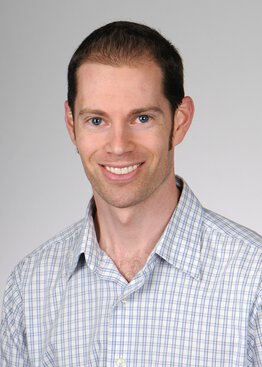
David Long, Ph.D., is the director of graduate training for the Department of Biochemistry & Molecular Biology and associate director of the Integrative Training in Oncogenic Signaling (ITOS) T32 program. As assistant director of cancer research and mentored training for Hollings Cancer Center, Dr. Long focuses on faculty mentorship, graduate and early-career development, and academic training programs.
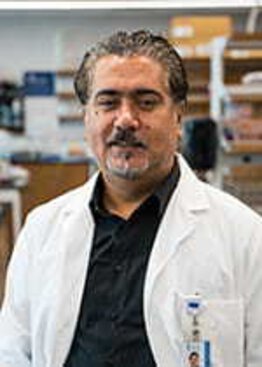
Ozgur Sahin, Ph.D., is a professor and endowed chair in Lipidomics, Pathobiology and Therapy in the Department of Biochemistry & Molecular Biology and Hollings Cancer Center at the Medical University of South Carolina (MUSC). Furthermore, I am an American Cancer Society (ACS) Research Scholar; founder, and president of LoxiGen, Inc.; and co-founder, and manager of OncoCube Therapeutics, LLC. My laboratory focuses on elucidating the mechanisms of cancer therapeutics, drug resistance and metastasis, mainly in breast cancer. We combine our expertise in cancer cell biology, functional transcriptomics/bioinformatics, and drug discovery, with those of the experts from the medicinal chemistry, proteomics, and medical oncology fields to target the most aggressive cancers.
Graduates may pursue research roles in academic laboratories, biotechnology, pharmaceutical science, government or other biomedical research settings. The degree can also help prepare students for doctoral, medical or other advanced professional study. Potential career paths include molecular and cellular biologist, cancer research scientist and biophysicist.
The program is a strong fit for students with a background in biology, chemistry, biomedical sciences or a related field who want focused graduate preparation in cancer research. Applicants must have earned, or expect to earn, a bachelor’s degree from a regionally accredited U.S. institution or an equivalent foreign institution before enrolling. Research experience is desirable but not required.
MUSC offers a residential cancer biology program built within an academic health sciences environment where graduate education, biomedical research and the clinical mission connect. Students learn from faculty engaged in cancer discovery and gain experience through coursework, laboratory-based learning, research seminars and mentor-guided inquiry. For students who want to build a future in cancer research, MUSC provides focused preparation to study how cancer develops, progresses and responds to intervention while strengthening the scientific judgment needed to contribute to discoveries that may improve outcomes for patients and communities.
Yes. The MS in Cancer Biology program is designed to strengthen your preparation for cancer research by combining graduate coursework with laboratory-based learning, research seminars and mentor-guided inquiry. Students build experience in tumor biology, molecular and cellular processes, experimental design, data interpretation and scientific communication.
Yes. The program can help students strengthen their academic and research preparation before pursuing a Ph.D., medical degree or other advanced professional study. Students develop the scientific judgment, research discipline and communication skills needed for future training in cancer biology, biomedical science, medicine or related fields.

Charleston offers a unique blend of coastal beauty and modern convenience. With top-rated dining, scenic waterfronts and endless outdoor activities, the city offers an unmatched quality of life for residents, striking a balance between work and leisure.
Grounded in interdiscplinary collaboration, this program cultivates intellectual curiosity, ethical leadership, and a commitment to advancing public health through data-driven approaches.
The MS in Cancer Biology program aims to prepare graduates to:
Upon completion of the MS in Cancer Biology program, graduates will be able to:
To advance a future where cancer discovery moves with rigor, urgency and humanity toward deeper understanding and better possibilities for patients and communities.
At the core of our program, we are guided by a commitment to the following values that drive our mission:
To prepare graduate students through focused cancer biology education, mentor guided inquiry and professional formation that strengthen scientific discovery and service to society.
Discover how your graduate education places you within the research creating impact for patients and families across MUSC’s cancer community advancing discovery and care today.


The Medical University of South Carolina is accredited by the Southern Association of Colleges and Schools Commission on Colleges (SACSCOC) to offer the Master of Science in Cancer Biology. To learn more about MUSC’s accreditation and find contact details, please visit our Accreditation page.